P.S.-- A relevant post on religion and spirituality by Sir.
How happy is the blameless Vestal's lot! The world forgetting, by the world forgot.
Friday, 28 March 2008
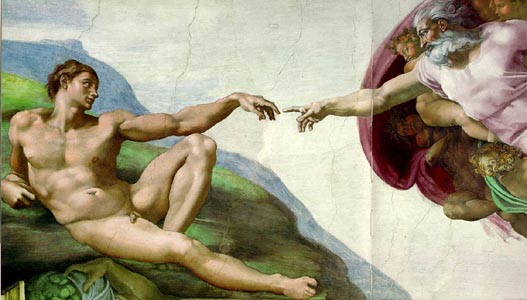
God, Religion and Belief
P.S.-- A relevant post on religion and spirituality by Sir.
Sunday, 9 March 2008
The Other Half of the World
Female infanticide. That is, some are not allowed to born - not allowed to born because they are ‘girls’. The moment a female foetus is diagnosed, it is aborted. Or even if they are born, they are killed. Some grow up a little, grow up much to realise the vibrating life in them, but then are killed – rather their souls are killed the moment they are sold to the greedy ‘dalals’ because they are feminine physically and will consequently mature to please the hunger of some masculine beasts – the so-called ‘man’ of the society. (Now, again, this is another mystery of the universe! This is the same man – the same gender - who gives the feeling of security to a girl and comes in the form of an affectionate father or an inspiring teacher or a good friend. The latter kind is even worthy of worship!) Anyway, where birth itself is such a ridiculous tragedy, what to talk of life!
Some are clearly given the signal that they are to be married not after long, that they are to go to school, that they aren’t to think or feel, that they must stop dreaming about the nature and smelling the blissful breeze blowing, instead they should learn to fuel the charcoal ‘sigri’ and wiping the floor (from my own experiences in Bihar)… Coming to the much better-off section of the society, the general middle class mentality seems to go more orthodox as time passes by. Even if girls are sent to schools, they are preferably sent to traditional girls’ schools so that they may be kept well-apart from the opposite gender to avoid the obvious bubbling-over of ‘feelings’ in their adolescence. When they work hard to understand Physics or Chemistry or Maths, mothers insist that it’s no use and rather it’d be better to learn a bit of cooking and house-keeping (I must add that I find nothing inherently wrong in learning to do a bit of household chores: just that women must not be reduced to mere brainless housekeepers!)
To go one step higher, I see typical aunties busy with gossip-scandals of Mrs. This and Mrs. That day in and day out, or glued with their T.V.s watching the K-serials. To go a level still higher, there are models sporting in least possible piece of garments and making the world a more dangerous place for other women to live in-- therefore catalysing the dreadful process of commercialisation of the female body. That the beauty and chastity of a female human form is being used to sell cars and soap is a slap in the face of God-- something created aesthetically and beautifully is thus reduced to just a tool to boost sales figures.
What I ask is: are girls all about this??? Even asking this question poses a source of embarassment to women like Mahashweta Devi, Mother Teresa, Ashapurna Devi, Kiran Bedi, Sunita Williams, Kalpana Chowla and a lot more. To add to these well-known achievers, there are numerous unknown (rather ‘nameless’ in the world of fame) women I know who live their life with a greater mission – I’ve come across my mother, many Catholic Sisters and married and unmarried Ma’ams and Misses who have discovered joy and fulfillment in broader things of the world. But, day by day, it seems their count is falling low…
Now, again, a point on the contrary about the type I mentioned somewhere near the end of the fourth paragraph: I didn’t mean that section of my gender who so proudly claim to be focused on their 'careers' and have in their heads some aims to get an MBA or an engineering /medical degree, that subtle emotions lose importance for them. Most of them think looking at the sky and smiling (because it looks so beautiful today with white fluttering clouds) as damn silly and stupid. Ask these girls to read a novel, you’ll get a scowl in return. Ask them to see a classic black-and-white movie, again get a scowl. Ask them to listen to some Rabindrasangeet, welcome that lovely scowl the third time! Now, of course, they aren’t wrong – my liking or disliking really doesn’t grade people (absolutely NOT!). Just that I hope they were a bit less absorbed in such materialistic things, and certainly a bit more appreciative of philosophic brilliance.
I wonder why I hear so few girls yelling aloud, “Hey, I want to sing today! I want to go out in the rain and feel the storm today! I want to go out in the fields and stand on the grass in bare feet! I want to spend the day doing nothing – nothing at all. (Maybe, I do sound a bit hopelessly romantic here, but that's what I am; and I am happy that I am so!) I want to fall in love with the nature-- with the world!”
Of course, it’s not about escapism or laziness – it’s about opening the gates of mind and loving life most simply and being a human most naturally. It’s about rejuvenating our lost sensitivities and feelings. Women are treasured with enormous power to love selflessly and sustain pain endlessly – why not be a woman more truly? Why not make our inner selves purer, more selfless and ‘beautiful’ in the real sense? After all, we make the other half of the world and the world dearly needs more of goodness.
Saturday, 9 February 2008
E.T. - The Extra Terrestial
Meanwhile, E.T. learns to speak by watching Sesame Street on T.V., which amuses the little girl Gertie very much. She tries to tell mum several times that her friend E.T. has learnt to speak (though, mum is totally unaware even of the existence of E.T. in the house!), but mum is so busy that she can't even stop for a moment to listen to her daughter. A very fitting and notable portrayal of usual parental attitude towards children: that of negligence. Elliott and Michael arrive at home to see E.T. not present in Elliott's room, much to their worry. And then they discover their friend in the toy-store of their little sister. Gertie cheerfully tells them that she taught E.T. how to speak, and just to celebrate that occasion she has dressed E.T. in a brilliant women's attire (again, much to the dismay of the two brothers). Both Elliott and Mike are happy to see that E.T. has learnt to speak like humans: and they hope to have some free conversations with their friend. But E.T. only keeps on muttering 'E.T. phone home', by which Elliott understands (as a loner himself) that E.T. is feeling terribly homeseick by now and wants to go back to his own home. And so he and his elder brother decide to devise a 'phone' to contact E.T.'s own kind. They chance upon some trash in the garage, in the process also discovering an abandoned shirt left behind by their father, who recently has had a messy divorce with their mother. The shirt re-awakens some lost happy memories of early childhood in both Elliott and Mike. Elliott has his hand cut by a sharp-edged gearwheel, but E.T. heals that in an instant with the miraculous power of his glowing finger (while Elliott looks on disbelievingly).
Wednesday, 9 January 2008
Taare Zameen Par - A Child's Review
There are films that make you laugh, and there are films that make you cry terribly. Having grown up in India, a country reputed for a film industry churning out either mindless laughathons or melodramatic sob-stories, it's difficult to get to watch the genuinely funny, or genuinely emotional film. And Aamir Khan gifts us both! Taare Zameen Par gives one lots of reasons to both laugh out loud and feel extremely sad. It's a story that relates to everyone of us in the world who have biologically grown up and yet never cease to look at the world through the eyes of innocent children: we can all see the Ishan Awasthi in ourselves, and with more or less intensity, we have all felt the same emotions cross our mind. And that is where TZP succeeds: it brilliantly connects with the viewers. While the antics of Ishan are sure to draw many a laugh (not through spurious rib-tickling humour, but the eccentricity which defines a fantastic childhood), his sobs are also quite certain to melt the hearts of those who have even a tiny morsel of love left in themselves.
To put the theme quite simply: this is the story of a dreamy boy. A boy who had the courage (and I don't say 'courage' because I don't find a better word) to look at the world through different eyes. Someone who could spend his day staring at a puddle of mud stuck in the craters of a road, or the birds flying high in the sky. Or even the little unknown fishes swimming in the drain by the road. This is a story of how the boy, inspite of his markedly different attitude towards life, still managed to attract criticism and wrath for being different. This is a tribute to the Apu-s blossoming in the jungle of bricks and amongst the 'racehorses' running life's 'race' in the cities of India (even if you think the parallel to Pather Panchali is too much, kindly wait till I end this post!). This is the story of Ishan Awasthi.
[Warning: I am revealing a lot of details about the film. So, forgive me for the spoilers!]
The story starts with all the teachers reading out the marks that the students have got in class tests held in Class III, St Xavier's School, Mumbai. And each time Ishan Awasthi manages to score the least of the lot! But no, Ishan isn't worried even a bit about his marks. The day at the school ends, and Ishan is by the drain outside his school, catching little fish using a homemade net, and putting them inside his water bottle! Ishan reaches home, discovers his favourite couple of dogs in his garden and without a bit of hesitation feeds them his test-papers! And that's just a little fun that Ishan has all throughout the day. And so he carefully pours out the fishes from his waterbottle into his personal collection of guppies, and then deliberately annoys his mother. Ishan's life is in complete contrast with that of his brother Yohan, the class-topper, avid sportsman and in short, Mr. perfect-son. But inspite of their differences, Yohan has a soft corner for his brother, whom he dearly loves. The only member of the family not happy with his less-than-genius freaky boy is Ishan's father-- who can't bear to think that while his elder son is everybody's favourite, his younger son is at the end of everybody's complaint: from teachers to neighbourhood parents. And while everyone in house is running about preparing for another day of hardwork, Ishan sleeps peacefully and blissfully in his room amidst an assortment of colours, paintings and toys.
Inspite of Ishan's mother's best efforts, she can't help her son with his studies because he easily forgets everything he learnt the previous day. Ishan can't follow his teacher's orders of opening page no. such-and-such and chapter no. such-and-such, which annoys her-- she thinks that the boy is deliberately pretending not to be able to follow her simple instructions. Worser still, Ishan can't read a word out of his English book! He's ordered out of the class, but given the 'bindaas' boy Ishan is, he takes the opportunity to indulge in his childish pranks. (Needless to say, punishments never perturb Ishan: he has grown both used to and rather fond of them!)
On the day his test-papers are distributed, Ishan cuts his classes-- roaming around in the streets of Mumbai by himself; staring at the pigeons flying, the ice-candyman spraying brilliant colours on balls of crushed ice, and even the most ordinary and common man making his way through the street. That night he cajoles his brother Yohan to write a false absence note for him. But Ishan's misdeeds are discovered by his parents, and when they visit school, they find a barrage of complaints against Ishan waiting for them. And hence Ishan's father decides that he'll have his son sent to a boarding school, in which one of his friends is a trustee. Ishan, of course, is quite angry with his father (brilliant expression of anger from Darsheel, by the way!), but nothing can dissuade his father now.
And hence inspite of all his wishes, the little boy is sent to a boarding school. Ishan can't bear the pain of separating from his family, and especially his mother (the person he loves most). The scene where the family leaves Ishan behind is brilliant and full-to-the-brim with emotion: the viewer can feel, almost tangibly, the pain wrenching Ishan's heart. The song 'Maa' brilliantly brings out the emotions that swirl around in Ishan's heart-- and kudos to Prasoon Joshi, the lyricist, for immortalising the feelings of a child towards his mother (I think Shankar Mahadevan also deserves special mention for his excellent and soulful vocal performance on the track).
All until one day when the arts teacher leaves for New Zealand and a stand-in man named Ram Shankar Nikumbh is brought in to temporarily fill in the role. And Nikumbh is none other than Aamir Khan! (Aamir shows us that he is more of a dedicated director in this movie rather than an actor, and that is why he chooses to enter the scenario only at intermission, placing the huge responsibility on carrying the first half almost entirely on Darsheel's shoulders: of course, a job that Darsheel more than ably accomplishes.)
Nikumbh is vastly different from the other teachers in the school. He is originally one of the teachers associated with the Tulip's school: an institution for the mentally retarded and physically challenged. While the other teachers are engrossed in their 'duty' to make 'racehorses' for life's 'race'-- Nikumbh understands that children must be allowed the freedom to imagine and make their own decisions. The role of the teacher is limited to that of a guide only-- children cannot simply be spoonfed some knowledge, or dry facts, and be expected to really shine in life! But above everything else, it's his attitude towards the students in which he is most different from others: he lets the kids have their share of fun, laughter, music and dance (another brilliant song 'Bum Bum Bole' actually expresses Nikumbh's feelings about education, Wordsworth-style!). The children are overjoyed to have such a friendly teacher, who not only lets them sing and dance, but also gives them the freedom to express whatever they want, in whichever way they wish to! But Nikumbh notices that a boy sits quietly throughout the arts period. Through his interactions with Rajan, Nikumbh comes to know about Ishan's problems with dyslexia and loneliness. Having been a dyslexic in his early life, he realises how suffocating the world must seem to Ishan, and therefore he sets foot on a mission to save the boy from emotional collapse.
Through a thorough study of Ishan's notebooks, Nikumbh spots a distinct trend in the mistakes the little boy commits. Since such a delicate matter needs the counsel of parents, Nikumbh himself reaches Ishan's house. Upon reaching, he is clearly dumbstruck. Firstly, he discovers the avid interest in art that Ishan has, and yet failed to show in the previous few weeks. And secondly, also more sadly, Ishan's father just refuses to believe that his son has learning problems: he still opines that Ishan must be seeking for excuses to skip studying. Nikumbh is much disappointed after his conversation with Ishan's parents, and especially his father: he discovers another one of those pathetic parents who are so concerned with (quite literally) cultivating/growing geniuses in their homes, that they forget the basics of human understanding and compassion. But Nikumbh does give a cheeky reply to Ishan's father before he leaves for his return back to school.
Nikumbh talks to the principal about the boy's weaknesses and personally requests for separate examination procedures for the boy, at least for the time being. He persuades the principal with strong arguments: showing him Ishan's brilliant paintings, surely the sign of a boy with above-average intelligence! And finally he personally undertakes the responsibility to train the boy in developing good language and mathematical skills. Somewhat hesitatingly, the principal agrees. And hence begins Ishan's journey towards overcoming the problems that threaten to destroy the very essence of his life. As the days pass by, Ishan slowly and steadily progresses until he can read and write for himself. Meanwhile, Ishan's father comes to 'visit' Ishan: actually meaning to remind Nikumbh that as a parent he was doing his part-- how? He proudly declares that his wife has read every article about dyslexia on the net. To which Nikumbh gives a tongue-in-cheek reply: something that is too much for the shameless man to stand. As he is about to leave Nikumbh's art-studio, he discovers Ishan quietly reading out a notice from the pin-board. The man is so moved to tears at his own foolishness and insensitive nature towards his own son that he can't bear to stand there for even a second.
Meanwhile, Nikumbh arranges for an Art Mela. Open for everyone, especially for the school staff and students, along with the Tulip school-children. The teachers do attend, most of them with a wish to just show the principal that they had attended the mela, but something forces them to stay back (Shan't reveal what, for that'll take away half of the fun regarding the Mela!!). But Nikumbh can't spot Ishan. The boy arrives after a long time and willingly chooses a lonely corner of the place. And Nikumbh starts his portrait of his own reflection, a student he had seen grow up before his own eyes in a certain sense: his dear Ishan. Funnily enough, even the initially unwilling teachers have their share of 'art' (You'll laugh till your stomach aches as you see them draw, and that's a guarantee!!). Both Nikumbh's and Ishan's paintings are shortlisted as the best but Ishan is ultimately awarded. Ishan can't bear the emotions overwhelming his simple mind, he breaks down and embraces his teacher! And all I can say is, that was brilliant!! The film ends with Ishan going back home with a happy family with the promise that he'll return to school later. I think it wouldn't be unjustified to say that the footage accompanying the end-credits was truly excellent: an honest portrayal of childhood in all its innocence and glory.
Now the inevitable comparisons with Black. Aamir himself is much critical of the film, and going by the recent trend of comments on other blogs I visit, most people have rated Black as the 'greatest ham-movie of all time'. I disagree. Black shall still remain one of my most favourite hindi-movies inspite of everyone's verdict against it. For one, I believe in my own heart; and Black moved me really well (perhaps, more on the defense of Black later!). And so did TZP. The two stories compare because at the core of the matter, both are about student-teacher relationships. And both are about the triumph of human spirit against all odds: and as such, both are brilliant in their own ways.
Wait, I remember saying something about Pather Panchali back at some point in my post. I don't take that one back! Yes, Ray was much more accomplished a director than Khan is, but in both their debut films, these two men chose to deal with different and sensitive subjects: that of children losing their identity and imagination in this big, bad and insensitive world. Apu was born in Nishchindipur, Ishan in Mumbai: and yet both were kings in their own worlds of imagination. Both loved the mysteries of nature, and both were enchanted by the colours of life. And in that sense, Apu and Ishan are just two names for the same person: only the time and place have changed, nothing else has changed much! Interestingly enough, Aamir himself graciously accepts the superiority of Ray over himself: and if you ask me, I have no problem in embracing such honest and hard-working (should we also add 'perfectionist'?) an actor and director as Mr. Khan.
P.S.-- You may also like to visit the film's official site, http://www.taarezameenpar.com/
Sunday, 23 December 2007
Samapti
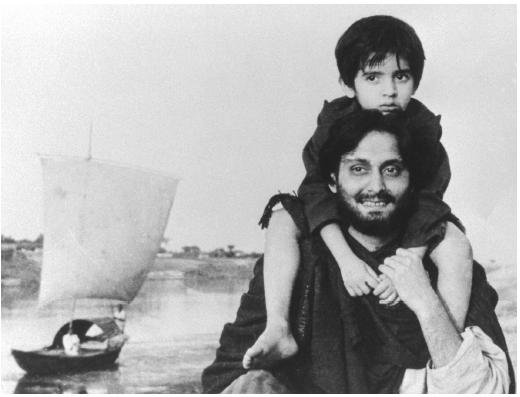
A Ray shortfilm, and the final part of the 'Teen Kanya' series adapted from the short stories; Samapti startles one with it's simplistic portrayal of life, and the wide range of emotions the human mind can scale...
Amulya, played by the legendary Ray-favourite Soumitra Chatterjee, is a young man from a village who returns from the city to visit his mother, Jogmaya. Jogmaya wants Amulya to get wedded soon: since he is on a two-month vacation, and there is an auspicious date for a wedding just around the corner. She has already decided who she wants as a daughter-in-law, and inspite of Amulya's unwillingness to tie the knot so soon, she coaxes him to visit the girl's house once.
And so Amulya makes his way through ankle-deep mud towards the girl's house. All the while, he is followed by a carefree and whimsical young village girl named Mrinmoyee (played by a very young Aparna Sen), who likes roaming with the village-children, swinging all day long, catching and playing with squirrels, climbing up trees and so on (and hence, she has earned the moniker: "Puglee"). Mrinmoyee is amused to see a well-dressed babu like Amulya finding it difficult to make his way through the mud. Amulya is received warmly by Kishori, the prospective bride's father (played brilliantly by my personal favourite, Santosh Dutta), who amuses the spectator quite a lot with his mannerisms-- especially, the 'he-he-he' smile that accompanies each line Kishori speaks! The visisbly shy and uncomfortable Amulya has to sit before an excessivley coy girl who can't articulate what to speak; and all the while Mrinmoyee stands an amused witness to the comic situation of sorts.. Just to make matters even funnier, Puglee launches her pet squirrel Chorki at the coy bride-to-be. What follows is a comedy of errors!
To cut the long story short now, Mrinmoyee's numerous pranks on Amulya convinces the young man that none but Puglee must be his bride. Ah! of course, Amulya's mother is devastated that her whimsical son has finally decided to marry a tomboyish girl who isn't modest in the least, and moreover considered by all and sundry as a freak. Finally though, she somehow warms up to her son's wishes. Meanwhile, Mrinmoyee can't stand the thought that she has to leave all her little friends, Chorki, the trees and playfields of the the village to become a housewife; and in a vain attempt to stop the marriage she chops her hair off. On the wedding night, a very patient Amulya explains how he'd like his new wife to be, and that he won't force her to do everything, but that doesn't stop the carefree Mrinmoyee to escape Amulya's house. She visits her little squirrel Chorki, and the swing by the river which she so loves. In the soft caressing love of Mother Nature, she falls blissfully asleep. Meanwhile, there's mayhem in Amulya's home as everyone discovers that Mrinmoyee has fled in the shadows of the night. They find her back and Jogmaya locks her up in a fit of rage. Inspite of his mother, Amulya frees his wife and says that he will leave her back at her father's house and leave for the city. If ever Mrinmoyee wants Amulya back in his life, she must only write him a letter. To show his love for the carefree girl, Amulya also says how he'll be happy if Mrinmoyee addresses him as "tumi" rather than "aapni".
Quite unexpectedly, Mrinmoyee loses the strong affinity she had for her little friends, Chorki, and Mother Nature and willingly resigns herself to a fast. Jogmaya is worried she won't see her son again, and hence on the advice of one of her friends, she writes to her son about an imaginary illness she's suffering from . Amulya returns to find out the truth, and obeying his mother's request to enquire about Mrinmoyee, he visits her father's house. But Mrinmoyee escapes in the meanwhile-- disappointed to learn that Amulya has returned not for her but for his own mother. On a stormy day, Amulya searches for Mrinmoyee all day long and returns disappointed. But just as he enters his room, he finds a note from Mrinmoyee saying "tumi fire esho". And the biggest surprise is that: Mrinmoyee is back, the same way she'd disappeared on the night of her wedding!
Samapti scales an amazing portion of the whole range of human emotions and psyche: love of nature, and love between humans. Again, a masterpiece from the master: Satyajit Ray.
Anyway, Christmas wishes to all my blog-readers, if any!! :)
Tuesday, 4 December 2007
Apur Sansar
Ray's third film, and the final instalment of the Apu Trilogy, begins with a portrayal of Apu staying in a rundown shabby quarter in Kolkata. He has no fixed job, just a few tuitions thrown here and there to earn himself enough money to have a meagre meal each day. Apu also writes an occasional short story and sends it to literary magazines-- and that's what pleases him most about his life. Even in this life of extreme poverty and deprivation, nothing can suppress his indomitable, and yet apprehensive and shy, spirit-- he has not lost his dreams of becoming a great author. When Pulu, Apu's best friend, arrives and offers him assistance in finding a fixed job, Apu expresses his dissatisfaction over the idea. Apu has realised that his life's goal is to remain free and thoughtful-- not bound to a job he doesn't like doing (he quotes names of great men who never once in their life 'settled down', to prove his point). Nonetheless Apu agrees to go to Pulu's mamabari (maternal uncle's house) at Khulna with him for Pulu's cousin's wedding ceremony. On the way to Khulna, Apu shows Pulu the manuscript of a novel he has started writing-- a work of art that Pulu admires quite a lot after giving a read. However on Pulu's cousin, Aparna's, wedding-day, it's revealed that her bridegroom is mentally unstable. Aparna's mother disagrees to surrender her daughter to a madman. In a strange turn of events, Apu somewhat unwillingly yields to the pressure of marrying Aparna-- for if he refuses, no one shall ever marry her again. On their first night together, Apu openly talks to his new bride, and honestly says that he is nothing more than a poor, thoughtful man with a penchant for writing stories-- who has nothing more than a few pennies and a ramshackle quarter to his name. Apu says that Aparna may have to adjust to living such a deprived life. Aparna willingly accepts her fate-- determined to be happy even amongst such poverty.
When Aparna is brought to Apu's Kolkata quarters, she suddenly realises the magnitude of his poverty-- and the hardships that await her. But as she gazes down the window through tearful eyes, she sees a poor child smiling and playing on the street with his mother-- and this cheers her up. Apu understands how hard it must be for Aparna to see the sharp contrast in lifestyles-- but when he asks her about the same, he is greeted with a warm smile, which reflects the love and respect Aparna has for Apu, and also the readiness with which she accepts her new life. Special credit must go to Satyajit Ray here for a cinematic metaphor which only geniuses can conceive-- in place of Apu's erstwhile tattered and dirty window-curtain hangs a clean one. The visually improved condition of Apu's household couldn't be portrayed better. There hasn't been much financial betterment since his marriage, but Apu's life has become more arranged, orderly and beautiful-- something which only a soft feminine touch of care and concern can bring about. After several blissful months together, Aparna leaves for her maternal home due to pregnancy. In the following two months, Apu and Aparna exchange warm letters of love-- their craving for each other almost seems childish at times. Apu's promise to visit her at the end of the month remains unfulfilled however-- while delivering their child, Aparna dies due to labour pains. Apu is so much aggrieved to hear the news that he can't stand the truth anymore-- in a trance of unspoken and unbearable pain and sorrow, he leaves Kolkata and wanders on meaninglessly. Suddenly, Apu's life and love lose all meaning to him-- he throws away the manuscript he so thoughtfully and carefully wrote at one point of time.
Several years pass by, and in the meantime Apu and Aparna's son Kajal grows up in the Khulna-house under the care of his maternal grandparents. The little child is just like his father-- carefree, imaginative, capricious and endearing. Aparna's father soon develops a grudge against Apu-- he can't bear the fact that a father never once came to take his son with him. Even the child, named Kajal, starts regarding his father with contempt-- people taunt him due to him being practically 'fatherless'. Pulu, Apu's old friend, comes back to Khulna from abroad and finds the house in a poor state-- his mama is old and nearing his end, while Kajal remains 'fatherless' and uncared for by the old man (who naturally can't run after the naughty child and cater to all his childish whims!). Incidentally, Pulu discovers Apu in the vicinity of Khulna and learns that Apu has been doing a job to somehow sustain himself. Apu is torn between his pain due to the loss of his beloved Aparna and his duty towards his son-- he can't stand the fact that he has to love a child whose birth resulted in the death of his beloved wife. (This explains Apu's negligence towards his child.) Apu therefore requests Pulu to arrange for his son's education in some boarding school, the expenses of which he is ready to bear. Because Pulu is in a hurry to leave the place and can't keep his friend's request, as a last plea, he urges Apu to visit the Khulna-house once and at least see his son for one time. Somewhat unwillingly, Apu does so. But when Apu sees Kajal, he discovers an affection for the boy hidden in some obscure corner of his heart and overshadowed by his immense bitterness towards his fate-- but on the contrary, Kajal is not ready to accept his father's affection. Touchingly, Apu presents his son with a toy-train (those who remember Pather Panchali remember how both Apu and Durga were fascinated with trains as children), but the child throws the gift away. Just when Apu is about to leave the place, broken-hearted for a second time, Kajal hesitatingly asks if Apu is ready to take him to his father in Kolkata (which actually shows that Kajal doesn't actually believe that Apu is his own father, but still touchingly discovers love for Apu too-- if not a father, Apu still is a close friend to the little one).
The film, quite simply, is poetry on celluloid. Ravi Shankar's touching sitar chords and the brilliant camerawork only make the film better. All the actors, and especially Soumitra Chatterjee and Sharmila Tagore (for both it was a debut-- and a debut couldn't have been better!), deserve plaudits for their natural and superb performances.
Again, some of my favourite scenes in the film deserve special mention. When Apu and Aparna come back from the theatre in a horse carriage, Apu stares at his beautiful wife's expressive eyes and lovingly asks "Tomaar chokhe ki aachhe?". With a charming glint in her eyes, she evades the real essence of the question, and answers "Kajal". And hence the name of their child-- the fruit of their immense but short-lived love-- finds a special meaning.
A second favourite scene would be the one in which Apu tries to befriend a reluctant and bitter Kajal, in the same room in which he had first talked his heart out to Aparna. The expression on Apu's face as Kajal threw the toy-train away in anger reflects how hurt he is-- a symbol of his love (both for his child, and for his lifelong fascination: trains) is so hastily dismissed by his own son.
The final scene is perhaps the grandest one: Apu gets his son-- the last physical manifestation of his undying love for Aparna, Kajal not only finds his father but a close friend, and Aparna's father sees his little dream of Apu and Kajal staying together come true-- he smiles as he sees father and son go away to their land of dreams. What happens thereafter to Apu and Kajal is left for us to imagine and decide.
Wednesday, 28 November 2007
On sexuality
The reason why I am writing this blogpost is that some classmates of mine commented that a certain Jodie Foster film named The Accused is a porno-flick. Frankly enough, I haven't watched the movie. But I've watched and observed Foster well enough to say that she doesn't need to do porn-flicks! Because, she is a two-time Oscar-winner and one of the most talented actresses around in Hollywood. Wanna know which film she won the first Oscar for? It's the same 'porno-flick'-- The Accused. I hope the Oscar commitee hasn't stooped so low that it's awarding an Oscar for a role in a 'porn-flick'!! Secondly, and more importantly, Foster was portrayed as a woman who was gangraped by a group of drunk rowdy men in a nightclub. Now that is food for thought-- why did a brutal rape-scene filmed really and painfully well (many sites rated the rape-scene as brilliantly filmed) seem titillating to a group of teenaged-students who've been born into and brought up by 'cultured' families? Have their consciences become so benumbed that something a cruel and ghastly as a rape-scene seems like 'porn' to them? Porn, as far as I can say, is a intentional portrayal of sex, not the picturisation of someone being violated! There was a lot of talk in the class about Foster being totally naked-- which, according to my dear classmates qualified The Accused as a porn movie. Now this is absolutely ridiculous-- (and to put it in a quite crude way) what else do you expect when a woman is being raped?
I won't make this post any longer, but will end stating that this episode makes me wonder again at how much we have progressed since the early days? There was that golden era of sexual liberalisation during the Hippie-infused 60's. How much has our ideas about sexuality changed since then? And when shall we accept the fact that sex is something as natural as eating or going to sleep? And why all this excited whispers about dirty jokes, and yet no frank discussion on sex in the public?